

Views: 0 Author: Site Editor Publish Time: 2025-12-08 Origin: Site


3-phase motors power much of the industrial world, offering efficiency and reliability. However, improper wiring can lead to costly repairs and downtime. In this article, we’ll explore how to hook up a 3-phase motor correctly. You’ll learn about key wiring methods, tools needed, and how to avoid common issues.
A 3-phase motor operates on three-phase alternating current (AC), where each phase is offset by 120 degrees, providing a constant flow of power. This type of motor is ideal for industrial applications because it maintains consistent torque, unlike single-phase motors that experience torque fluctuations. As a result, 3-phase motors are more efficient and reliable for heavy-duty tasks.
Advantages of 3-phase motors include:
● Higher Efficiency: They require less energy to generate the same amount of power.
● Continuous Torque: Ensures smooth operation without interruptions, ideal for machinery requiring steady motion.
● Cost-Effective: While more expensive initially, they reduce long-term operational costs due to efficiency and reduced energy consumption.
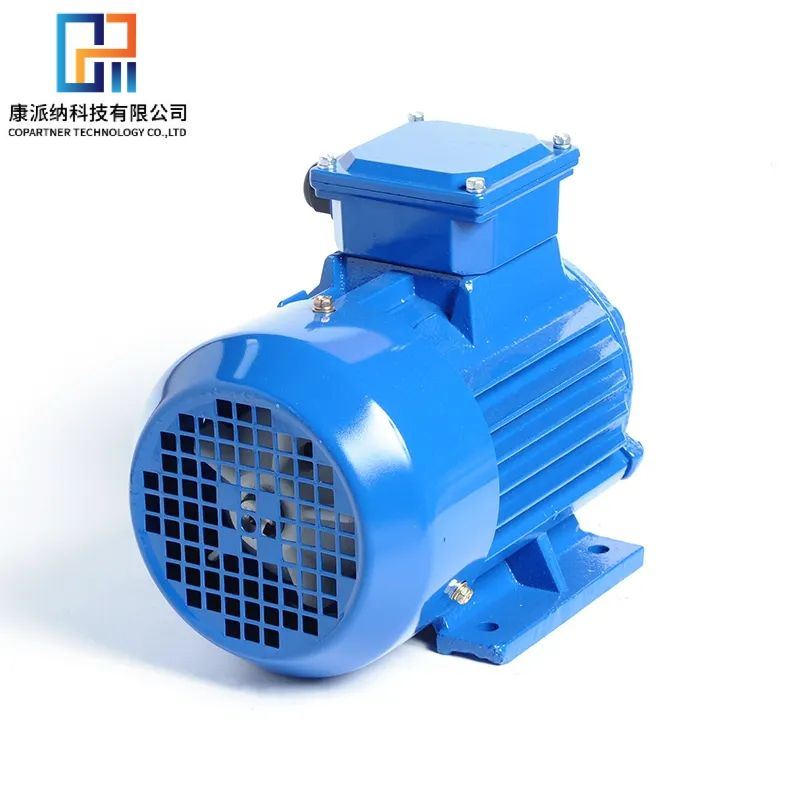
When connecting a 3-phase motor, there are two main wiring configurations: Star (Y) and Delta (Δ). Each has distinct advantages depending on the application's needs.
● Star (Y) Connection: In this configuration, the three windings of the motor are connected at one point to form a neutral. This setup reduces the voltage across each winding, making it ideal for applications requiring a lower starting current. It is commonly used for motors with larger capacities.
● Delta (Δ) Connection: The windings are connected in a loop, where the end of one winding connects to the start of the next. This configuration provides full voltage to each winding, delivering higher torque from the start. It is typically used when the motor needs to deliver full power immediately, such as for heavy industrial machinery.
Choosing the right connection method depends on the motor's power requirements:
Feature | Star (Y) Connection | Delta (Δ) Connection |
Voltage | Voltage is divided by √3 | Full voltage across windings |
Starting Current | Lower starting current | Higher starting current |
Torque | Lower starting torque | Higher starting torque |
Applications | Suitable for high-capacity motors that need smoother starts | Best for applications needing high torque immediately, like conveyor systems |
Tip: If you're working with large machinery and want to minimize initial power surges, opt for the Star (Y) connection. For machines requiring immediate power, choose the Delta (Δ) connection.
Before you begin wiring your 3-phase motor, make sure you have all the necessary tools on hand:
● Screwdriver: To secure terminal screws.
● Wire Stripper: To strip the insulation off the wires.
● Multimeter: For checking voltage and ensuring safety before starting the installation.
● Insulating Tape: To cover connections and prevent short circuits.
● Protective Gloves: To keep your hands safe from electrical hazards.
Tip: Always check that your tools are in good condition before use. Poorly maintained tools can cause errors in wiring and increase the risk of accidents.
Working with electricity can be dangerous, so it's important to prioritize safety:
● Disconnect the Power Supply: Before doing any work, make sure to turn off the main power supply. Use a lockout/tagout procedure to ensure no one accidentally restores power during your work.
● Use Personal Protective Equipment (PPE): Always wear gloves and safety goggles to protect yourself from electrical shocks and debris.
● Clear Your Workspace: Keep your work area dry, clean, and organized to prevent accidents.
Important Note: Never assume the power is off. Always double-check with a multimeter to ensure there is no voltage present in the circuit before starting any work.
The Star (Y) connection is ideal for applications where a smoother start with lower electrical stress is required. Here’s a more detailed guide on how to wire a 3-phase motor in the Star (Y) configuration:
● Disconnect the Power Supply: Before starting any electrical work, make sure to cut off the power supply completely. This prevents accidental electrical shocks.
● Identify the Motor Terminals: Open the terminal box of the motor and carefully identify the terminal markings. You'll see terminals labeled as U1, V1, W1 for the power supply lines, and U2, V2, W2 for the motor windings.
● Create the Neutral Point: The neutral point is crucial for the Star (Y) configuration. Connect the ends of the motor windings, U2, V2, and W2, together. This will form the neutral point, which is essential for reducing voltage across each winding during startup.
● Attach the Incoming Power Lines: Next, attach the three-phase incoming power supply lines to the terminals U1, V1, and W1. Each phase should be connected to its corresponding terminal. Ensure the connections are secure to prevent any loose wiring.
● Secure and Insulate the Connections: Tighten all terminal connections, ensuring they are firmly in place. Use insulating tape or wire covers to wrap any exposed wires or connections. This will prevent accidental short circuits or electrical contact.
● Final Safety Check: Before turning the motor on, conduct a thorough check. Use a multimeter to ensure that no short circuits or loose connections are present. Confirm that the neutral point is properly secured and that the wiring is accurate.
Tip: The Star (Y) connection reduces the voltage across each winding, making it ideal for motors requiring a smoother start. This method is also helpful in minimizing electrical stress on the system.
The Delta (Δ) connection is ideal when full torque is required right from the start. Follow these steps to wire a 3-phase motor in the Delta (Δ) configuration:
● Disconnect the Power Supply: Make sure all electrical power is turned off to avoid any shock risks.
● Identify Motor Terminals: As with the Star connection, open the motor terminal box and locate the terminals U1, V1, W1, U2, V2, and W2.
● Connect Windings in a Loop: In the Delta (Δ) configuration, each winding is connected in a loop. Connect U1 to W2, V1 to U2, and W1 to V2. This creates the triangular shape characteristic of the Delta connection.
● Attach the Incoming Power Lines: Now, connect the three-phase power supply to the terminals U1, V1, and W1. These are the points where each power phase is supplied.
● Secure and Insulate the Connections: Make sure each connection is tightly secured. Use insulating tape to cover any exposed wires or terminals to prevent short circuits or accidental contact.
● Final Safety Check: Conduct a final check using a multimeter to confirm that all connections are secure and there are no issues like short circuits before powering the motor on.
Tip: The Delta (Δ) connection applies full voltage to the motor windings, resulting in higher torque at startup. This is ideal for applications requiring immediate power, such as heavy-duty machinery.
Even with careful wiring, problems may arise during motor operation. Below are some common issues and their solutions:
● Motor Not Starting: This may be due to incorrect wiring or a faulty power supply. Double-check all wiring connections, especially the incoming power lines. Ensure that each line is connected properly to its respective terminal.
● Unusual Noises: If the motor emits strange noises during startup or operation, it could indicate loose wiring or mechanical issues. Ensure that all terminals are properly tightened and there are no exposed wires that might be causing the issue.
● Overheating: Overheating can occur if the motor is overloaded or if there is an issue with ventilation. Ensure the motor is not connected incorrectly or exposed to excessive load. Also, check that the motor’s cooling system is working efficiently.
Tip: A multimeter can help you troubleshoot wiring issues by checking continuity and verifying the correctness of the electrical connections. Address any issues immediately to avoid long-term damage.
Before turning the motor on, make sure:
● Use a Multimeter: Check all connections for continuity and ensure everything is properly secured.
● Check Insulation: Confirm that all exposed wires are insulated and that no bare wire is accessible.
Tip: Double-checking your work reduces the risk of electrical hazards and ensures the motor runs efficiently.
Once the wiring and safety checks are complete, you can power on the motor:
● Start at Low Speed: Begin by running the motor at a lower speed to test if it starts smoothly.
● Monitor the Motor’s Behavior: Pay attention to any unusual noises, vibrations, or signs of overheating during the initial startup.
Tip: Always monitor the motor during its first run to catch any issues early.
Correctly wiring a 3-phase motor is crucial for ensuring its longevity and optimal performance. By following the steps outlined in this guide, you can confidently wire your motor for safe and efficient operation. Always prioritize safety, use the appropriate tools, and double-check your work to avoid common electrical issues that could lead to downtime and costly repairs.
For those seeking high-quality 3-phase motors, Copartner Technology Co., Ltd. provides reliable solutions. Their products offer exceptional performance, efficiency, and long-lasting durability, making them an excellent choice for various industrial applications.
A: To hook up a 3-phase motor, first identify the motor terminals and determine whether you'll use a Star (Y) or Delta (Δ) connection. Ensure the power supply is off, then securely connect the power lines to the appropriate terminals. Double-check all connections before powering on.
A: Proper wiring of a 3-phase motor ensures efficient operation, prevents electrical faults, and minimizes the risk of overheating or damage. Incorrect wiring can lead to motor failure and costly repairs.
A: The Star (Y) connection provides lower voltage and is ideal for smooth startups, while the Delta (Δ) connection offers full voltage for higher torque, making it suitable for heavy-duty applications.
A: Yes, incorrect wiring can lead to motor malfunction, overheating, or even permanent damage. Always ensure proper connections and verify with a multimeter before powering on.
A: Essential tools include a screwdriver, wire stripper, multimeter, insulating tape, and safety gloves. These tools ensure accurate wiring and safety during installation.
A: 3-phase motors provide more consistent torque, higher efficiency, and are better suited for industrial applications where continuous power is needed.


