

Views: 0 Author: Site Editor Publish Time: 2026-02-04 Origin: Site


Why do some machines run smoother and quieter than others? The answer often lies inside the gears. A helical geared motor plays a key role in industrial drives by improving noise control, load handling, and long-term reliability. In this article, you will learn why helical gears make such a difference in real applications.
When engineers and buyers evaluate the advantage of helical gears, they usually focus on how a helical geared motor behaves during real operation. It feels smoother, produces less noise, and handles load changes more gently. These characteristics are not accidental. They come directly from how helical gears are designed, how their teeth mesh, and how forces are distributed inside the gearbox during rotation.
Helical gears use teeth that are cut at an angle to the gear axis, usually between 5° and 45°. This angled design changes the way force is transmitted through the gear set. Instead of all tooth surfaces meeting at once, engagement starts at one end and moves progressively across the tooth face. In a helical geared motor, this geometry plays a major role in reducing mechanical shock and improving motion quality.
Key effects of the helix angle include:
● It increases the effective contact length between mating teeth, allowing forces to spread more evenly.
● It reduces sudden impact loads that typically occur in straight-tooth gear designs.
● It supports smoother torque transfer, especially at medium and high operating speeds.
Because of this, helical geared motors designed by manufacturers such as Copartner Technology emphasize optimized helix angles to balance smooth operation, load capacity, and long-term durability.
Design Aspect | Helical Gear Feature | Influence on Helical Geared Motor Performance |
Tooth orientation | Angled relative to shaft | Progressive engagement, smoother rotation |
Helix angle | Carefully selected range | Balance between torque and efficiency |
Contact length | Longer than spur gears | Reduced stress and improved stability |
One of the most noticeable operational advantages of helical gears is how gently the teeth engage during rotation. As the gears mesh, contact develops gradually along the tooth length rather than occurring all at once. This significantly lowers impact forces transmitted through the gearbox and motor shaft.
From a practical point of view, this gradual engagement helps:
● Reduce vibration that can affect surrounding equipment and structures.
● Lower operating noise, which is important in indoor or continuous-duty environments.
● Protect bearings and shafts from repetitive shock-related fatigue.
In a helical geared motor driving conveyors, packaging machines, or automated systems, reduced shock loading leads to more stable speed output and fewer mechanical disturbances over time. This stability becomes especially valuable when the motor operates under fluctuating or uneven loads.
Helical gears naturally achieve a higher contact ratio than spur gears, meaning more than one tooth pair shares the load at any given moment. Instead of transferring force from one tooth to the next, the load is distributed across multiple teeth simultaneously. This load-sharing behavior is a key reason helical geared motors can transmit higher torque without increasing gear size.
This design offers several practical benefits:
● Localized stress on individual teeth is reduced, slowing wear.
● Torque capacity increases without sacrificing compact gearbox dimensions.
● Gear life improves under continuous and heavy-load operation.
When customers compare industrial drive options, they usually focus on how the system behaves during daily operation. A helical geared motor stands out because it combines smooth motion, strong load handling, and long-term reliability in one compact unit. These advantages are not abstract engineering claims. They directly affect noise levels, equipment lifespan, and how stable the machine feels during continuous operation.
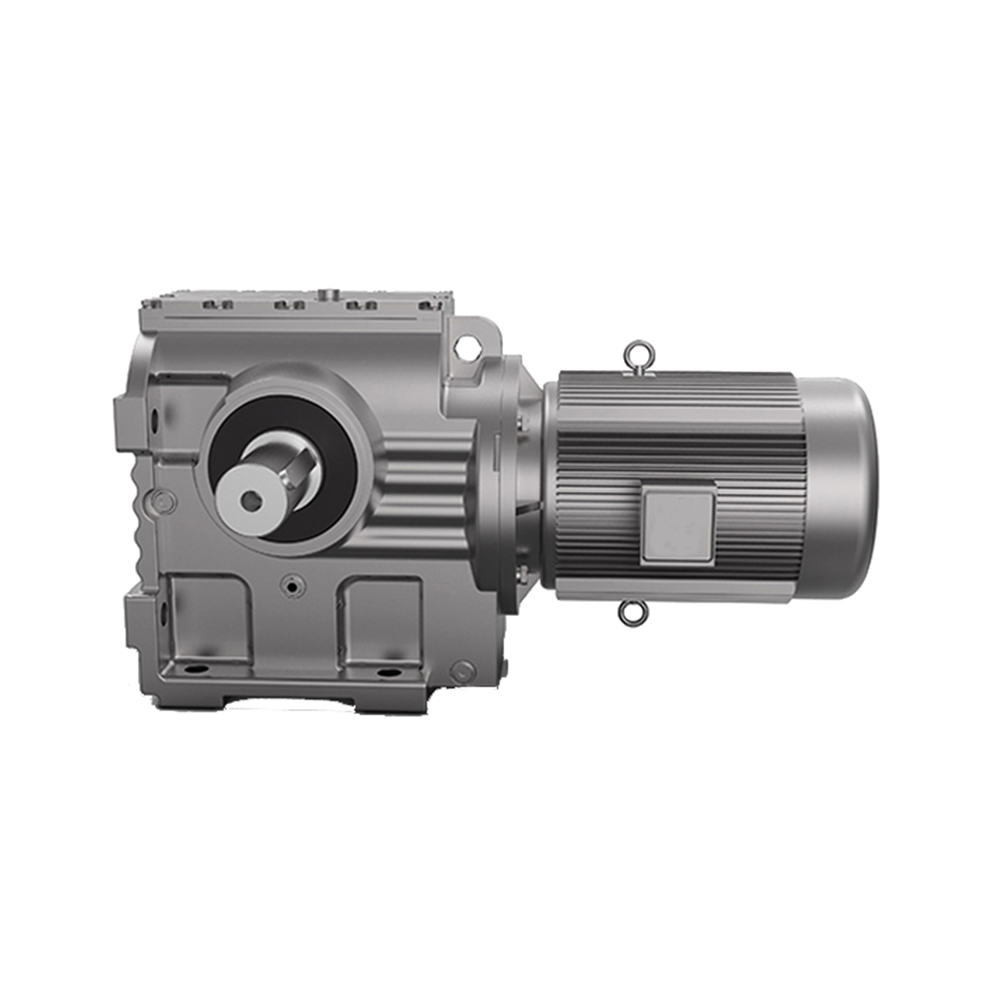
One of the most immediate advantages of helical gears is how quietly they run. Because the teeth engage gradually rather than colliding all at once, vibration levels drop noticeably. In a helical geared motor, this smoother engagement reduces mechanical noise at the source, instead of relying on external sound insulation or damping measures.
For many industrial environments, quiet operation is not just a comfort issue. It directly impacts operator safety, equipment wear, and compliance with workplace noise standards. This is why helical geared motors are widely adopted in applications where machines operate close to people or run continuously for long shifts.In practice, smooth and quiet operation supports:
● More stable speed output, even when load conditions change.
● Reduced vibration transfer to frames, floors, and surrounding equipment.
● Improved working conditions in indoor production lines and enclosed facilities.
Operating Aspect | Spur Gear Drive | Helical Geared Motor |
Tooth engagement | Sudden, impact-based | Gradual, progressive |
Noise level | Noticeably higher | Significantly reduced |
Vibration | More pronounced | Lower and more stable |
Suitability | Open or low-speed setups | Indoor, continuous-duty systems |
Beyond smoothness, load capacity is often the deciding factor when selecting a helical geared motor. Helical gears have angled teeth that effectively increase tooth length and contact area. Instead of a single tooth carrying most of the load, multiple teeth share it at the same time. This design allows the gearbox to transmit higher torque without increasing size or sacrificing reliability.
In real operating conditions, higher load capacity means the motor can handle starting torque, shock loads, and long periods of heavy operation more comfortably. Wear slows down because stress spreads across several teeth, not one concentrated point. This is especially valuable for machinery that runs under constant load or experiences frequent starts and stops.Key load-related benefits include:
● Higher torque output from compact gearbox designs.
● Reduced tooth stress, lowering the risk of pitting or surface damage.
● Longer service life under continuous-duty and heavy-load conditions.
Load Performance Factor | Helical Gear Advantage | Impact on Motor Operation |
Contact ratio | Multiple teeth in mesh | Load shared more evenly |
Effective tooth length | Increased by helix angle | Higher torque capacity |
Wear behavior | Slower, more uniform | Extended gearbox lifespan |
When a helical geared motor runs on the factory floor, performance and reliability show up in very practical ways. Operators notice stable speed, engineers see fewer failures, and maintenance teams deal with longer service intervals. These benefits come from how helical gears manage load, motion, and heat during continuous operation, not from any single design feature alone.
Durability is one of the strongest reasons customers choose a helical geared motor for long-term use. Because multiple gear teeth share the load at the same time, stress spreads evenly across the gear surface. This reduces localized wear and slows down common failure modes such as pitting or surface fatigue.
Over time, this balanced load behavior helps protect not only the gears themselves, but also shafts, bearings, and housings. In real applications, it often means fewer unexpected shutdowns and longer maintenance intervals, especially in systems running under constant or heavy load.From a reliability standpoint, this design helps:
● Reduce tooth wear caused by concentrated stress.
● Lower the chance of cracking or premature tooth failure.
● Maintain consistent gear alignment over long operating hours.
Wear Factor | Conventional Gear Behavior | Helical Geared Motor Behavior |
Load distribution | Concentrated on fewer teeth | Shared across multiple teeth |
Tooth surface stress | Higher and uneven | Lower and more uniform |
Typical wear rate | Faster under heavy load | Slower and more controlled |
Stable power delivery becomes critical as operating speed increases. A helical geared motor delivers torque smoothly because the gear teeth engage progressively and remain in contact longer during rotation. This reduces speed fluctuation and helps the motor maintain consistent output, even when the load changes during operation.
In applications such as conveyors, mixers, and processing equipment, speed stability directly affects product quality and process control. Sudden torque changes or vibration can disrupt material flow or cause uneven processing. Helical gears help avoid these issues by keeping torque delivery steady across the operating range.In day-to-day operation, stable transmission supports:
● Predictable speed behavior during start-up and load variation.
● Reduced vibration transferred to frames and connected machinery.
● Smoother operation at medium and high rotational speeds.
Efficiency in a helical geared motor is closely tied to heat management. Helical gears generate some sliding friction because of their angled teeth, and this creates heat and axial forces during operation. Instead of treating this as a drawback, well-designed gearboxes manage it through proper lubrication, bearing selection, and housing design.
When lubrication is matched to operating speed and load, friction-related losses stay controlled and heat dissipates effectively. This balance allows the motor to run efficiently while still benefiting from high load capacity and smooth motion. Companies like Copartner Technology focus on gearbox structure and lubrication paths to maintain this balance in real industrial environments.Key factors affecting efficiency include:
● Gear tooth sliding behavior at higher helix angles.
● Lubrication quality and oil circulation inside the gearbox.
● Heat dissipation through housing and mounting design.
Efficiency Aspect | Design Focus | Practical Result |
Sliding friction | Controlled by gear geometry | Reduced power loss |
Lubrication system | Matched to load and speed | Stable operating temperature |
Heat dissipation | Optimized housing design | Longer component life |
Flexibility in system layout is another practical advantage of helical gears. They can transmit power between parallel shafts and also support non-parallel arrangements when the application requires it. This gives engineers more freedom when designing compact machines or retrofitting existing equipment.
In a helical geared motor, this flexibility allows the drive system to fit into tighter spaces without sacrificing performance. It also simplifies integration into complex machinery layouts, where shaft alignment options may be limited by surrounding components or structural constraints.
Choosing a helical geared motor is not only about torque and speed. Buyers usually look deeper into how the gearbox behaves over time, how it handles internal forces, and how much attention it will need once installed. These factors decide whether the motor runs smoothly for years or becomes a frequent maintenance issue.
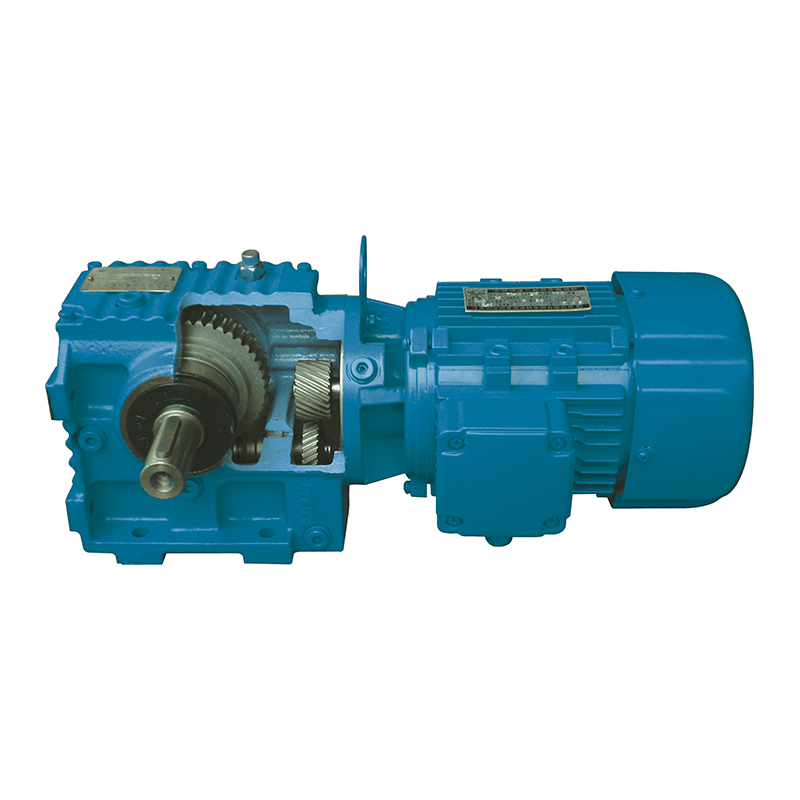
Helical gears naturally generate axial thrust along the shaft because of their angled teeth. This force pushes the gears sideways while they rotate. If the gearbox design does not manage this thrust properly, bearings wear faster and alignment suffers. In a helical geared motor, bearing selection becomes just as important as gear geometry.
Good designs use thrust bearings or reinforced bearing arrangements to absorb axial loads safely. This protects shafts, reduces internal friction, and keeps the gear mesh stable during long operating hours.When reviewing technical specifications or quotations, buyers should pay attention to:
● Bearing type and whether it supports both radial and axial loads.
● Shaft design and housing rigidity under continuous thrust forces.
● Rated axial load limits under normal operating conditions.
Design Element | Why It Matters | Impact on Motor Reliability |
Axial thrust control | Prevents sideways gear movement | Stable gear meshing |
Bearing selection | Handles combined loads | Longer bearing life |
Housing strength | Maintains alignment | Reduced vibration |
Lubrication plays a critical role in the efficiency and lifespan of a helical geared motor. Because helical gears involve sliding contact as well as rolling contact, friction generates heat during operation. Proper lubrication reduces this heat, limits power loss, and protects gear surfaces from wear.
Maintenance requirements often depend on operating speed, load level, and environmental conditions. Motors running continuously or under heavy load need more attention to oil quality and replacement intervals. Poor lubrication shortens gearbox life even if the gear design itself is sound.In real applications, good lubrication practices help:
● Control operating temperature under high-speed conditions.
● Reduce surface wear and prevent early pitting.
● Extend service intervals and reduce downtime.
Lubrication Factor | Proper Practice | Long-Term Effect |
Oil type | Matched to load and speed | Lower friction losses |
Oil circulation | Consistent and sufficient | Stable temperature |
Maintenance interval | Regular monitoring | Extended gearbox life |
Buyers often compare helical gears and spur gears before making a final decision. Each has strengths, but the application usually determines the better option. Helical gears provide smoother motion, lower noise, and higher load capacity, which makes a helical geared motor suitable for demanding industrial environments. Spur gears, on the other hand, use straight teeth, making them simpler and more efficient at low speeds.
For systems where noise, vibration, and continuous duty matter, helical geared motors usually deliver better overall value. Their ability to handle higher loads and operate quietly often outweighs the slightly higher complexity in design and maintenance.Key comparison points include:
● Noise and vibration behavior during continuous operation.
● Load capacity and durability under heavy-duty conditions.
● Efficiency priorities at low speed versus overall performance stability.
Comparison Aspect | Helical Gears | Spur Gears |
Tooth engagement | Gradual and smooth | Sudden and direct |
Noise level | Lower | Higher |
Load capacity | Higher | Moderate |
Typical use | Continuous-duty systems | Simple, low-speed drives |
When buyers look beyond specifications, they usually care about consistency, engineering depth, and how well a product performs in real industrial conditions. A helical geared motor is only as good as the design decisions behind it. This is where Copartner Technology brings clear value, combining long-term engineering experience with a strong focus on practical industrial performance rather than short-term optimization.
Copartner Technology Co., Ltd. (FSCOPartner) has spent more than two decades working specifically on geared motor systems for industrial use. This experience shows in how their helical geared motors balance smooth operation, torque output, and durability. Instead of focusing on a single performance metric, their designs consider how the motor behaves over long operating cycles, under load changes, and in demanding environments.
In practice, this approach results in gearboxes that feel stable, predictable, and easy to integrate into existing systems. Engineers tend to notice fewer vibration issues, while maintenance teams benefit from longer service intervals and more consistent performance.Their engineering focus typically emphasizes:
● Gear geometry optimized for smooth torque transfer and reduced mechanical stress.
● Bearing and housing designs that support axial and radial loads reliably.
● Gearbox structures that maintain alignment during continuous-duty operation.
Engineering Focus Area | Design Approach | Practical Benefit |
Gear tooth design | Optimized helix angle | Smoother and quieter operation |
Bearing arrangement | Axial and radial load support | Improved long-term reliability |
Housing structure | High rigidity | Stable gear alignment |
A major advantage of Copartner’s helical geared motor range is its adaptability across industries. Different applications place very different demands on drive systems, yet the same core helical gear principles can support them when applied correctly. Copartner designs its geared motors to handle both steady loads and frequent start-stop cycles without sacrificing smoothness or service life.
This flexibility allows the motors to fit naturally into systems where space is limited or where layout constraints require compact and efficient drive solutions. Over time, this reduces integration complexity and helps equipment designers keep machine footprints under control.Common application areas include:
● Material handling systems such as conveyors and lifting equipment.
● Packaging and processing lines requiring stable speed and low noise.
● Textile and automation machinery operating for long production shifts.
● General industrial equipment where reliability matters more than peak output.
Industry Application | Key Requirement | How the Helical Geared Motor Responds |
Material handling | High torque, steady motion | Smooth load sharing and stable output |
Packaging equipment | Low noise, precision | Quiet operation and speed consistency |
Textile machinery | Continuous duty | Reduced wear and extended service life |
Automation systems | Compact layout | Flexible mounting and efficient design |
Helical gears improve smoothness, noise control, and load handling in industrial drives.A helical geared motor delivers stable torque, long service life, and reliable operation.Copartner Technology applies this design to create geared motors that support efficiency, durability, and flexible industrial use.
A: A helical geared motor combines a motor and helical gears to deliver smooth, quiet, and high-torque power.
A: A helical geared motor offers lower noise, smoother motion, and higher load capacity.
A: A helical geared motor is used in conveyors, packaging lines, automation, and processing equipment.
A: A helical geared motor needs proper lubrication to manage heat and ensure long service life.
A: Yes, a helical geared motor handles heavy loads through better load sharing and torque output.


