

Views: 0 Author: Site Editor Publish Time: 2026-02-02 Origin: Site


Why do so many machines rely on helical gears instead of simpler designs?From factories to homes, smooth motion and quiet operation matter more than ever.
In this article, you will learn where a helical geared motor is used and why engineers choose it for real machines.
In real operating environments, machines rarely run under perfectly stable loads. Helical gears are preferred because their angled teeth engage progressively, allowing force to build up smoothly rather than arriving all at once. This creates controlled motion and reduces mechanical stress during daily operation, especially in systems that run continuously. For equipment driven by a helical geared motor, this tooth design improves how the motor and gearbox interact under load.
Key operational improvements include:
● Gradual tooth engagement, which softens impact during start-up and load changes.
● Multiple teeth sharing load at the same time, reducing stress on individual teeth.
● Smoother torque delivery, helping machines maintain steady rotation.
● Reduced shock transferred to shafts, bearings, and housings.
● More stable motor current and lower risk of torque spikes.
These characteristics make helical geared motors well suited for conveyors, mixers, and automated machinery that demand consistent motion.
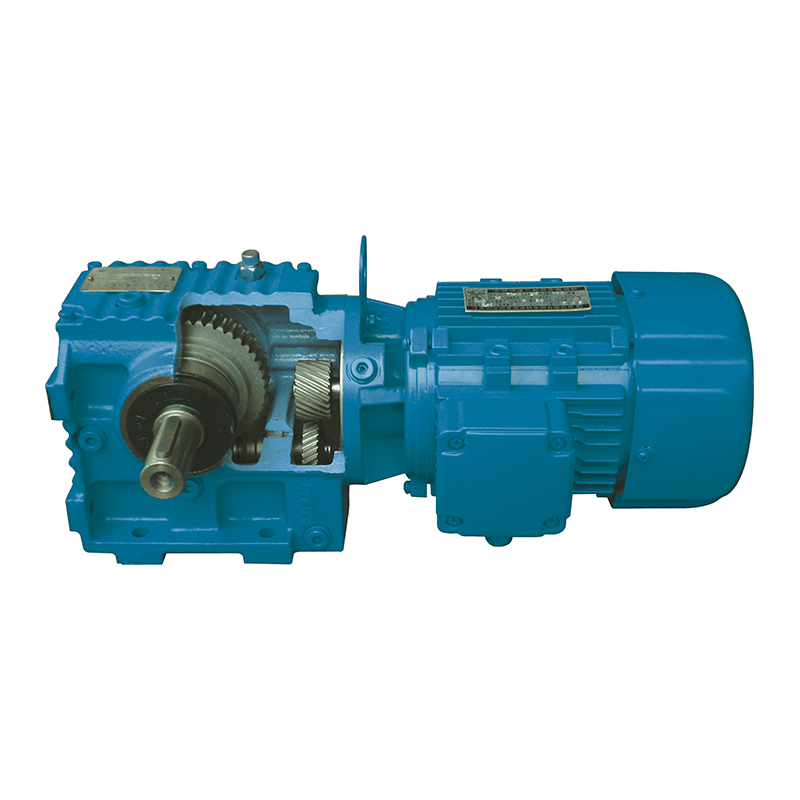
Noise and vibration are critical factors in modern machine design. Spur gears often create noticeable sound because their straight teeth engage suddenly, especially at higher speeds. Helical gears reduce this effect naturally through angled teeth and overlapping contact. Machines using a helical geared motor tend to operate more quietly without relying on additional noise-control components.
In practical applications, low noise and vibration matter because:
● Vehicles must meet strict NVH expectations for comfort and quality.
● Elevators and lifts require smooth, silent movement for passenger safety.
● Household appliances depend on quiet operation during daily use.
● Packaging and automation equipment need low vibration to maintain accuracy.
Additional benefits from reduced vibration include:
● Less fatigue on machine frames and fasteners.
● Improved alignment stability between motor and gearbox.
● Longer service intervals and fewer maintenance issues.
Many machines require high torque but offer limited installation space. Helical gears address this by distributing load across several teeth, allowing higher torque transmission without increasing gear size. This supports compact gearbox designs and lighter machine structures. A helical geared motor combines this advantage with an integrated motor-gear layout, simplifying installation and saving space. Manufacturers such as Copartner Technology focus on this balance when designing geared motor solutions.
From a design perspective, this results in:
● Smaller gear dimensions handling the same torque as larger spur gears.
● Compact gearboxes that fit into tight or modular machine layouts.
● Even load distribution that improves durability under heavy loads.
● Integrated motor and gearbox units that reduce assembly complexity.
Design Aspect | Helical Gear Behavior | Practical Result |
Load handling | Multiple teeth engaged | Higher torque capacity |
Gear size | Reduced dimensions | Compact gearbox layout |
Structural stress | Even force distribution | Longer service life |
Integration | Motor and gearbox combined | Easier installation |
These layered advantages explain why helical gears are widely chosen for real machines that demand efficiency, stability, and compact design.
In passenger vehicles, power delivery needs to feel smooth at every speed. Helical gears are widely used in forward gears because their angled teeth engage progressively, allowing torque to rise naturally as the vehicle accelerates. During this process, several effects happen together inside the transmission:
● engine speed aligns smoothly to road speed,
● gear engagement avoids sudden impact,
● noise stays controlled even at higher RPM. When auxiliary automotive equipment relies on a helical geared motor, the same principles apply. They help maintain stable rotation, reduce drivetrain vibration, and support compact transmission layouts. This balance between comfort and durability explains why helical gears dominate modern passenger vehicle gearboxes rather than straight-cut alternatives.
Elevator systems focus on torque, control, and comfort rather than speed. When the motor starts, power flows through a helical gear reduction stage, where speed decreases and torque increases before reaching the traction sheave. During this motion, the gear design plays a quiet but critical role:
● load builds gradually as the cabin starts moving,
● vibration transmitted to the cabin structure remains low,
● movement feels steady even when passenger weight changes. A helical geared motor allows elevators to operate smoothly across thousands of daily cycles. Because elevators run close to people, this quiet and stable behavior is essential not only for comfort but also for long-term mechanical reliability.
Transportation and vertical systems rarely run at constant speed. They start, stop, brake, and accelerate repeatedly throughout the day. Helical gears manage these transitions more effectively because load transfer does not arrive as a shock. Instead, torque increases progressively, which protects mechanical components during each cycle. In practice, this means:
● reduced stress on shafts and bearings during acceleration,
● smoother deceleration without abrupt disengagement,
● better control in traction-driven and safety-critical systems. When paired with a helical geared motor, these characteristics create predictable motion and reduce wear caused by short, repeated duty cycles. Manufacturers such as Copartner Technology design their geared motor systems to handle exactly these demanding start-stop conditions.
Application Scenario | Role of Helical Gears | Result in Real Systems |
Passenger vehicles | Progressive speed matching | Comfortable acceleration and low noise |
Elevators and lifts | Torque amplification | Smooth, stable vertical motion |
Start-stop systems | Gradual load transfer | Reduced shock and longer service life |
Industrial machines often run for long hours and face constant load changes. Conveyors, compressors, blowers, mixers, and cutters all depend on stable torque and reliable motion. Helical gears fit these needs well because their angled teeth engage smoothly and keep load transfer controlled during continuous operation. Inside these systems, several demands appear at the same time:
● torque must remain steady as material weight changes,
● vibration must stay low to protect frames and sensors,
● downtime must be minimized during long production shifts. For these reasons, industrial gearboxes frequently integrate a helical geared motor. It combines motor and gearbox into a compact unit, simplifies installation, and delivers consistent performance. Companies like Copartner Technology design such geared motors to support heavy-duty cycles without sacrificing efficiency or service life.
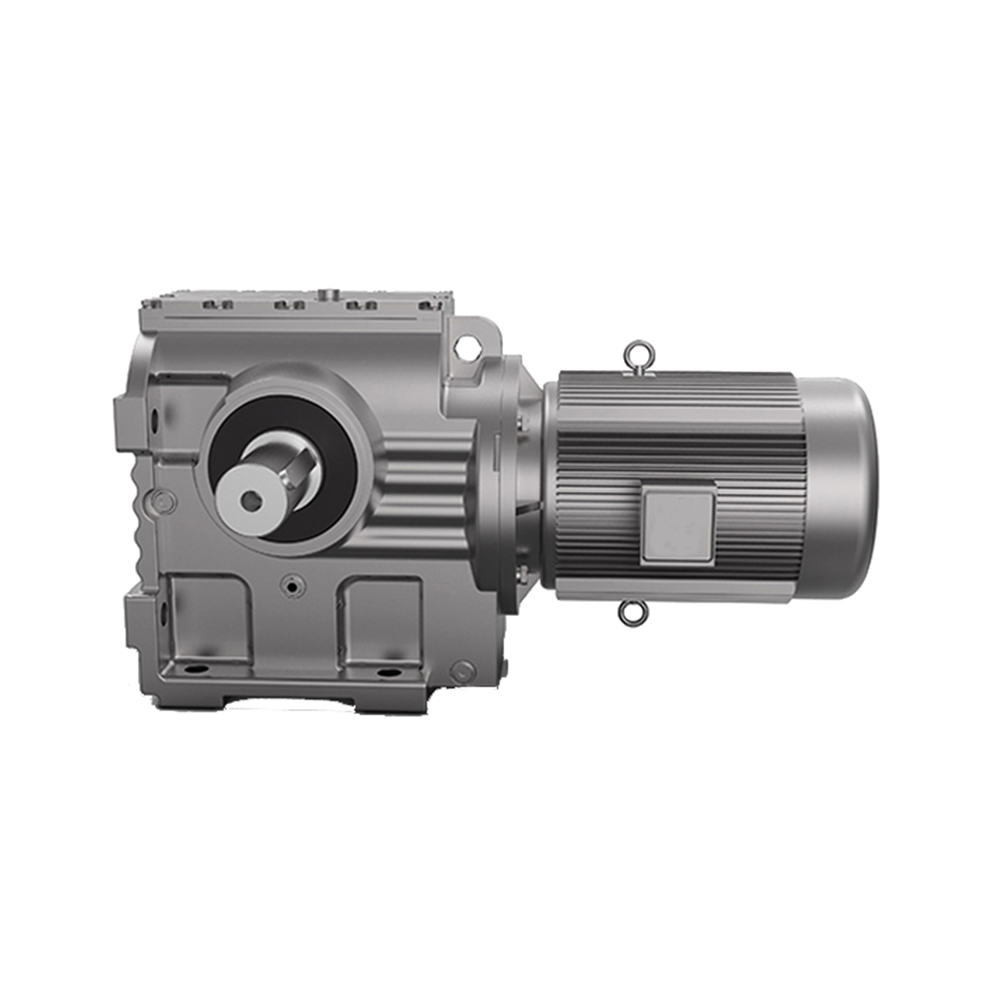
Household appliances require a different balance between power and comfort. Modern washing machines often replace belt drives using a “motor + helical gear reduction” structure. During washing, the drum needs low speed and high torque to create gentle but effective movement. During dehydration, the same system must switch to higher speed smoothly. In both cases, helical gears help manage the transition. Inside the appliance, this gear design supports daily use because:
● torque builds gradually when the drum starts rotating,
● vibration stays controlled during high-speed spinning,
● noise levels remain acceptable for indoor environments. When driven by a compact helical geared motor, washing machines feel more stable and quieter, improving user comfort while reducing mechanical wear over time.
High-power electric tools such as impact drills and industrial drilling machines place intense demands on their transmission systems. These tools require strong torque at low speeds, especially when cutting through hard materials. Helical gears help amplify torque without introducing excessive noise or shock. During operation, the benefits appear clearly:
● load increases smoothly as the drill meets resistance,
● sudden impacts are softened during start and stop cycles,
● vibration felt by the operator is reduced. By pairing the drive system with a helical geared motor, manufacturers improve control and comfort while maintaining compact tool size. This approach also helps extend gear and bearing life under frequent, high-load use.
Machine Type | Operating Need | Role of Helical Geared Motor |
Industrial conveyors | Continuous duty, high torque | Stable rotation and long service life |
Washing machines | Low-speed wash, high-speed spin | Smooth transitions and low vibration |
Electric drills | Low speed, high load | Controlled torque and reduced noise |
Selecting a helical geared motor always starts from how the machine actually runs, not from catalog data alone. Some machines prioritize speed and smooth rotation, while others demand high torque at low speed. Duty cycle further shapes the decision. A system running nonstop faces very different stresses compared to one that starts and stops frequently. Understanding these patterns helps avoid oversizing, overheating, or early wear. In real projects, engineers usually break the evaluation into operating behavior and load behavior, then match them step by step rather than guessing a gear ratio.
Typical operating scenarios engineers compare:
● High-speed, light-load machines where smooth rotation matters most.
● Low-speed, heavy-load machines where torque stability is critical.
● Continuous-duty systems requiring thermal balance and efficiency.
● Intermittent-duty systems exposed to repeated starts and stops.
What buyers often clarify early in the selection process:
● Actual output speed range during normal operation.
● Peak torque versus average working torque.
● Daily running hours and rest intervals.
● Whether overload conditions appear during start-up.
Helical gears naturally generate axial thrust because of their angled tooth design. This force travels along the shaft and directly affects bearing life. Even a well-sized gear set can fail early if bearings cannot manage combined axial and radial loads. For this reason, bearing design becomes a key factor in gearbox reliability rather than a secondary detail. When evaluating a helical geared motor, experienced buyers look beyond torque ratings and ask how internal forces are controlled. Proper bearing selection helps maintain alignment, reduces vibration, and protects seals during long-term operation.
Common checks buyers make when reviewing gearbox design:
● Type of bearings used to handle axial thrust.
● Load capacity under continuous operation.
● Shaft stiffness when torque and thrust act together.
● Manufacturer experience in industrial bearing layouts.
Reliability Aspect | What to Look For | Practical Impact |
Axial force | Thrust-handling bearings | Reduced shaft wear |
Bearing capacity | Load margin under duty cycle | Longer service life |
Alignment | Stable shaft support | Lower vibration |
Design experience | Proven gearbox layouts | Predictable reliability |
As machine power increases, axial thrust can become a limiting factor. Single helical gears perform well in most applications, but thrust grows with load and gear width. When machines reach higher torque levels, designers often move toward double helical, or herringbone, gears. These gears use opposing tooth angles to balance thrust forces internally. This approach improves stability and reduces stress on bearings. It appears most often in heavy-duty or high-power machines where reliability outweighs compact size or cost considerations.
How designers typically decide between the two options:
● Single helical gears for standard industrial loads and compact gearboxes.
● Double helical gears when axial thrust threatens bearing life.
● Heavy-duty systems where uptime matters more than simplicity.
Beyond calculations, installation and maintenance shape long-term satisfaction. Mounting orientation, shaft arrangement, and lubrication access all influence how easily a helical geared motor fits into a machine. Integrated motor-gear solutions reduce alignment work and simplify system design. Manufacturers like Copartner Technology focus on complete geared motor assemblies, allowing buyers to treat the drive as a single unit rather than separate components. This reduces commissioning time and lowers the risk of installation errors.
Questions buyers often raise during evaluation:
● Can the geared motor operate in horizontal and vertical positions?
● Is lubrication sealed for life or serviceable on site?
● How accessible are bearings and seals during maintenance?
● Does an integrated design reduce wiring and alignment effort?
Typical benefits of integrated geared motor solutions:
● Faster installation and commissioning.
● Reduced alignment and assembly errors.
● More compact and organized machine layouts.
This article explains what machines use helical gears across transport, industry, and households. It shows how smooth engagement, low noise, and high torque improve real machine performance. A helical geared motor supports continuous duty and frequent start-stop operation. Copartner Technology offers reliable geared motor solutions that deliver compact design, stable output, and long service value.
A: A helical geared motor combines a motor and helical gears to deliver smooth torque and quiet operation.
A: A helical geared motor is used in conveyors, elevators, washing machines, and industrial equipment.
A: A helical geared motor reduces noise, vibration, and shock under load.
A: A helical geared motor shares load across multiple teeth, improving torque capacity and stability.
A: A helical geared motor needs proper lubrication and bearing support for long service life.


